Quality Rice Straw for Biomass, Agriculture and Industrial Applications
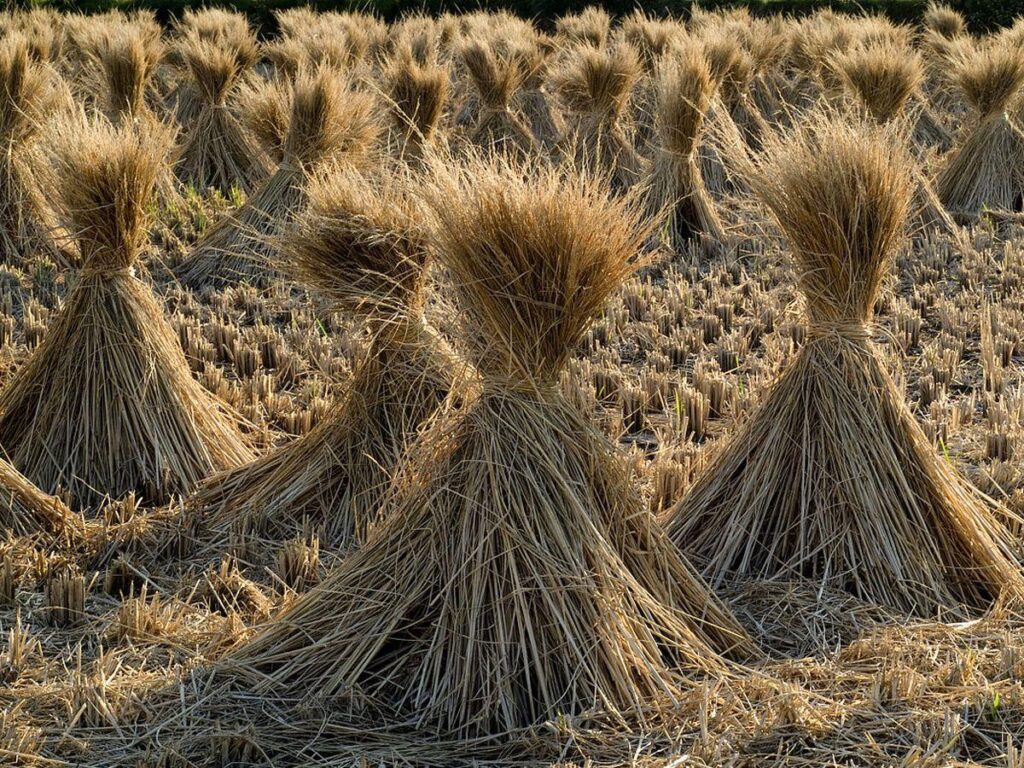
MA Associates offers Rice Straw, a natural agricultural by-product obtained from rice cultivation and harvesting. Rice straw consists of the dried stems, leaves, and other above-ground residues of the rice plant left after the grain is harvested.
Rice straw is a versatile source of agricultural biomass used in biomass energy production, composting, soil management, livestock bedding, and the production of bio-based materials. Its fibrous structure and renewable origin make it a valuable raw material for businesses seeking practical uses for agricultural residues.
At MA Associates, we understand the importance of product quality, consistent specifications, and reliable sourcing for industrial and commercial buyers. Rice straw can be supplied in suitable forms according to availability and the buyer’s requirements.
Product Overview
Rice straw is a lignocellulosic biomass containing cellulose, hemicellulose, lignin, and mineral components. Its properties make it suitable for several agricultural and industrial applications, including biomass fuel, compost production, bioenergy processing, and selected manufacturing processes.
Depending on the intended use, rice straw may be supplied as dry loose material, bundled straw, bales, or chopped material, subject to availability.
Key Features and Benefits
- Renewable Agricultural Biomass: Obtained from rice cultivation and harvesting.
- Biomass Fuel Potential: Suitable for compatible biomass combustion and energy systems.
- Agricultural Applications: Used for composting, soil management, and mulching.
- Industrial Raw Material: Can be processed for bio-based products and other material applications.
- Multiple Supply Forms: May be available loose, baled, or chopped.
- Resource Utilization: Supports productive use of agricultural residues.
- Application-Specific Supply: Quality parameters can be discussed according to buyer requirements.
Quality and Supply
Rice straw quality depends on its moisture content, cleanliness, maturity, storage conditions, and processing method. Buyers should confirm technical parameters before ordering, especially when the product is intended for industrial fuel, animal bedding, or processing applications.
Contact MAA Associate for availability, product specifications, bulk quantity requirements, packaging, and delivery arrangements.
Technical Specifications of Rice Straw
The following table provides general reference specifications for dry rice straw. Published studies report heating values around 14–15 MJ/kg and ash content that can vary considerably with the source and condition of the material.
| Parameter | Typical Value |
|---|---|
| Product Name | Rice Straw |
| Origin | Rice cultivation and harvesting |
| Physical Form | Dry fibrous stems and leaves |
| Colour | Golden yellow to light brown |
| Moisture Content | Approximately 7–15% for dry material |
| Ash Content | Approximately 10–25%, depending on source and test basis |
| Calorific Value | Approximately 3,360–3,600 kcal/kg (higher heating value reference) |
| Bulk Density | Varies with loose, chopped or baled form; around 60 kg/m³ is one published loose-straw reference |
| Main Components | Cellulose, hemicellulose, lignin and mineral matter |
| Supply Form | Loose, baled or chopped, subject to availability |
Technical note: The ranges above are indicative. Heating value is reported on a higher-heating-value basis; actual usable energy depends on moisture and combustion conditions. Please confirm moisture, ash, bulk density and calorific value through sample testing.
Why Choose MAA Associate?
- Quality-focused sourcing of agricultural biomass.
- Product specifications discussed according to the intended application.
- Bulk supply enquiries for industrial and commercial buyers.
- Options for discussing material form, moisture requirements, and packaging.
- Support with product information for procurement and technical evaluation.